

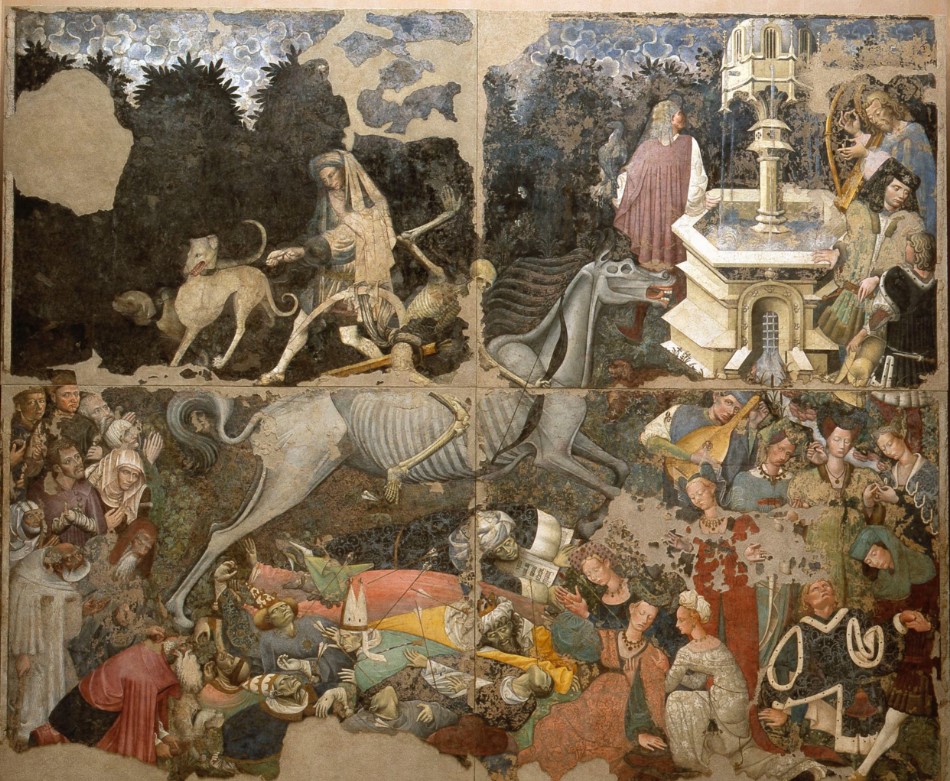
Controlling the human population is easy, courtesy of a zoonotic disease. The plagues of history, whether in 5C BC Athens at the point of vanquishing Sparta; or the Black Death of 14C that killed c.50m people; or the plagues in London and Eyam in 1665, skin lesions (buboes) and fever, all blamed on rats and the fleas feasting off them.
Fast-forward to 2026, and the Lumpy Skin Disease (LSD) that Do we buy the zoonotic narratives?
Well, the cases of the Great Plague of London and that of Eyam in 1665 offer valueable insights. That in London produced 100,000 mortalities and while King Charles II, Parliament and most of the merchandise class, left London to set up court in Oxford, the rest of London’s population, whether healthy of sick, were forceably confined to their homes should traces of the plague be found. Leaving the city was dependent on having a Certificate of Health. Huge wealth transfers occurred to the most wealthy.
BBC Bitesize invokes “a significant increase in the population of black rats which carried the bubonic plague bacteria” but Professor Cohn of the University of Glasgow, in his book The Black Death Transformed (2002), noted that the plague was “any disease other than the rat-based bubonic plague”, not least because no scholar has found evidence, archaeological or narrative, of a mass death of rodents preceding or accompanying any wave of plague. Moreover the alleged bacteria, Yursinia pestis, thrives in 10-25 degrees Celsius, and yet plague flourished in Norway, Sweden and Scotland, as well as in the Mediterranean in the hot month of June.
The real cause? Well, the journalist Henry Muddiman wrote in 1665 of a butcher in Newgate Market who, at death’s door, took tobacco and ale recovered.
Now, for those readers who have followed the Covid drama of 2020-2024 and listened to the findings of Dr Bryan Ardis concerning the part played by tobacco (nicotine) in reversing the effects of the snake venom in the jabs/ water supply, Muddiman’s observation is likely to prompt the question: ‘Could the plague have been the consequence of poisoning by snake venom?’ All the more so when you consider that homeopath Dr George Matthew stated that alcohol is a natural solvent and an antidote to venom poisoning (2012).
A fanciful idea? Perhaps not since a study by Brogna et al (2021) analysed the urine, bloods and the faeces of up to twenty three Covid Italian victims, finding the ‘presence of peptides characterised as toxic components of animal venoms. Indeed, the researchers found 36 types of animal venoms in the bodily parts of the experimental group, twenty from snake venoms and sixteen from marine shellfish creatures, with both including ‘elapid’ and ‘viper’ species. Elapids have a neurotoxic effect, interfering with the transmission of nerve impulses while vipers have a haemotoxic effect, undermining the circulatory system and producing bleeding and/or blood clots.
Pure chance then that the word ‘virus’ means poison? Perhaps time to appreciate that pandemics are engineered events.
Cassandra Wise PhD 558 words